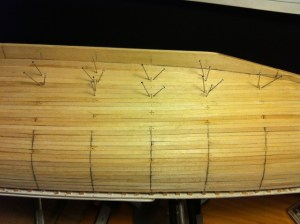
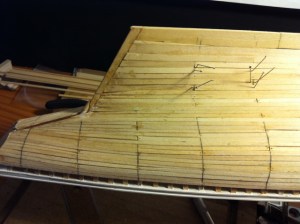
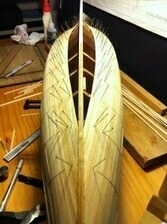
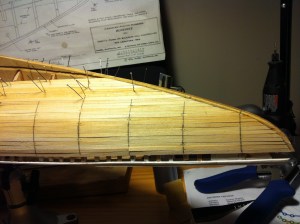
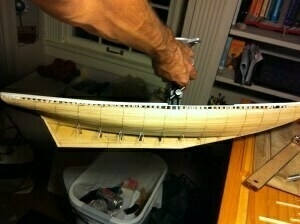
Before & After

Before:
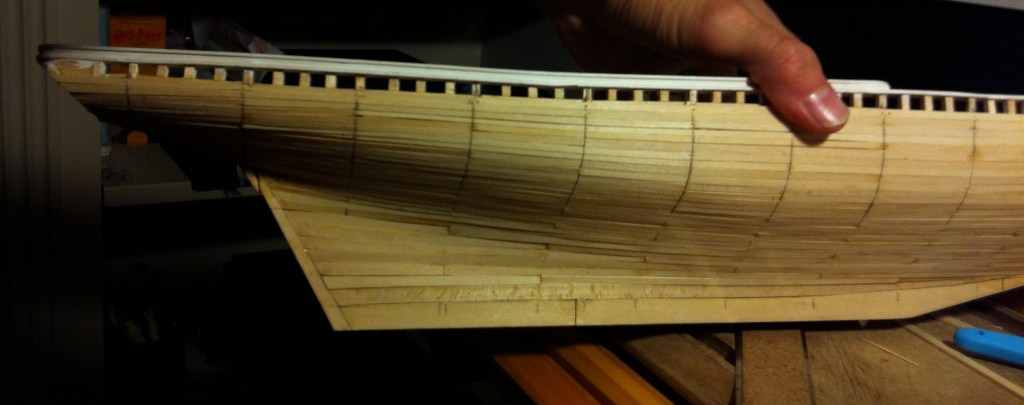
After:
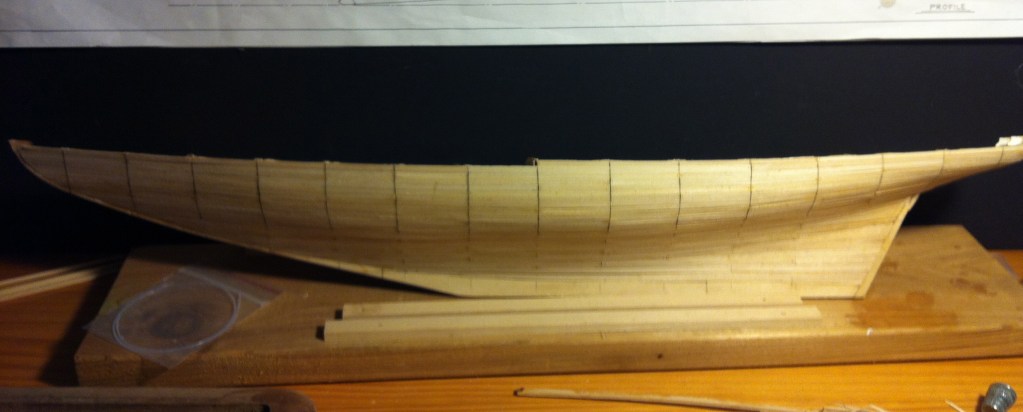
It’s been what, 4 months since I last posted here. A variety of things interfered with my posting, vacations, work on apps, etc. but the biggest reason I’ve not made any progress on the boat and on the blog has been my unwillingness to face reality.

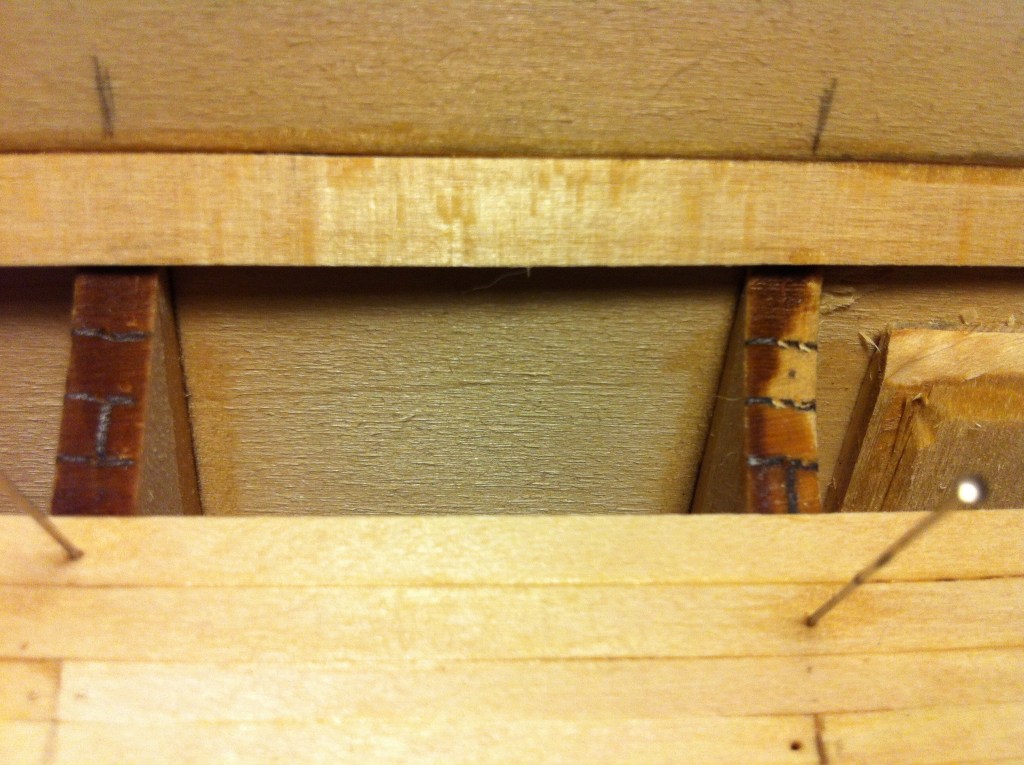
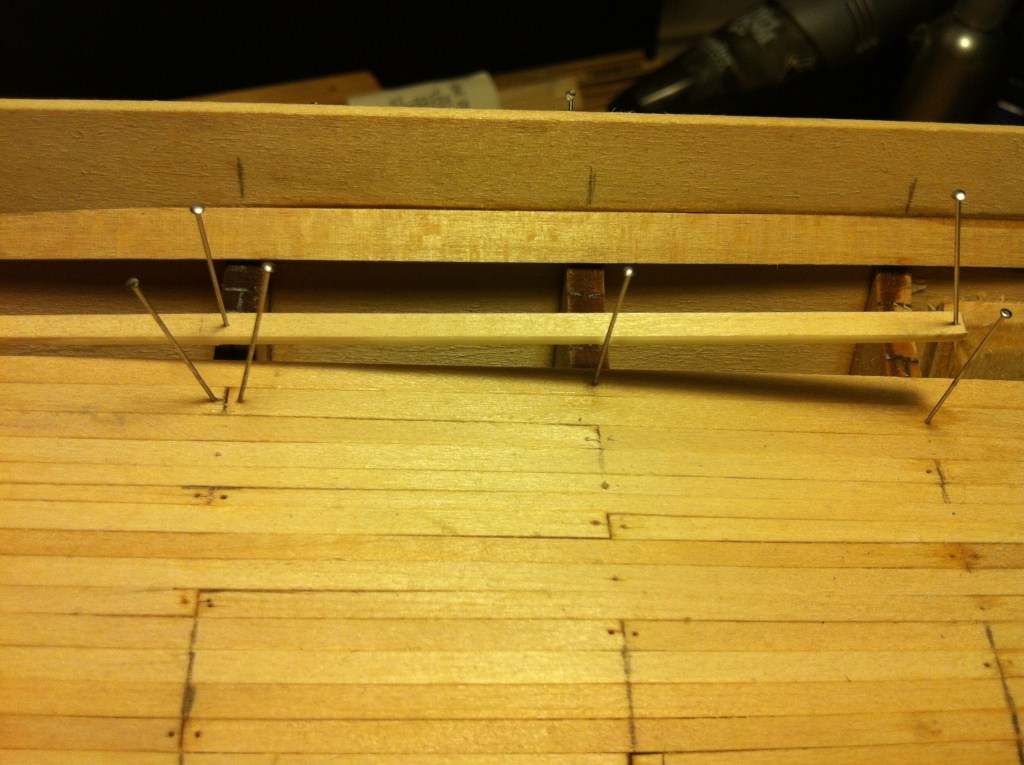
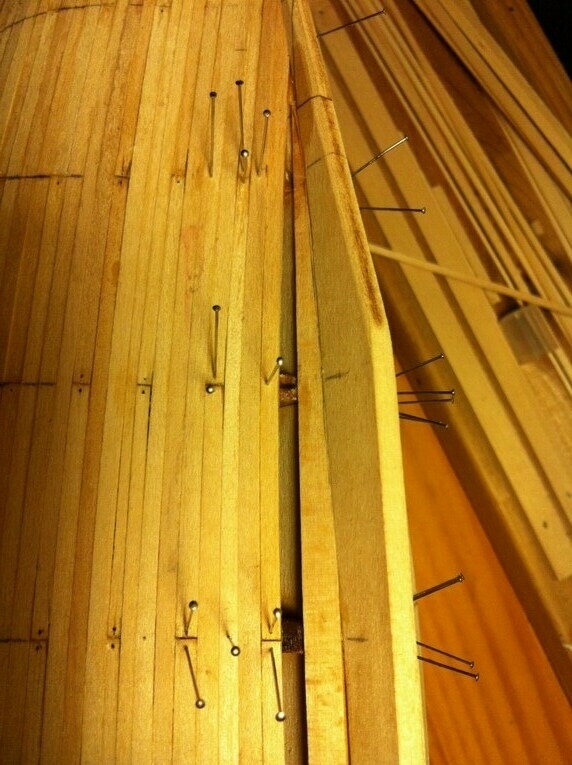
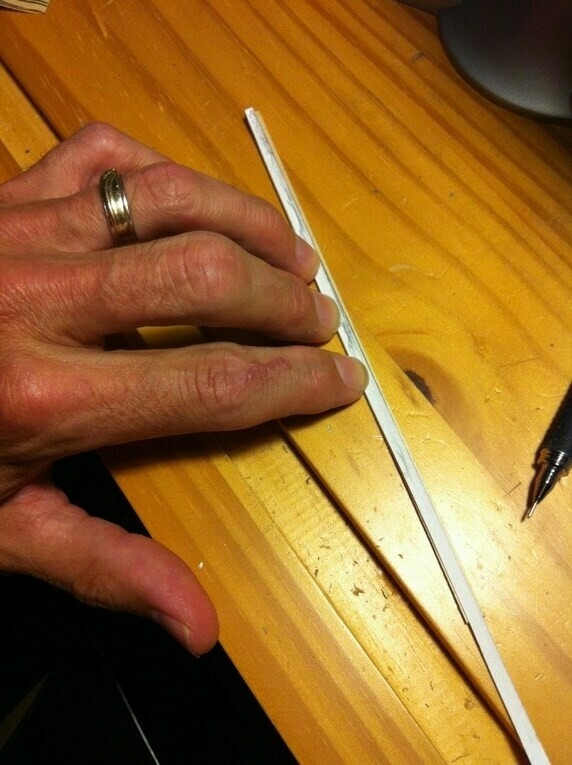
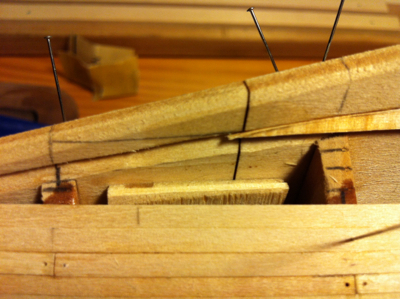
In my last post I claimed I was done planking. Well, that turned out not to be true. I had forgotten about the waist. The waist is a strip of planking that is to go between the rail (the white painted stuff in the “before” photo above) and the hull planking. This planking is half the thickness of the hull planking. The idea was to fit it in between the existing hull planking and the rail similar to what I had done in finishing the planking earlier.

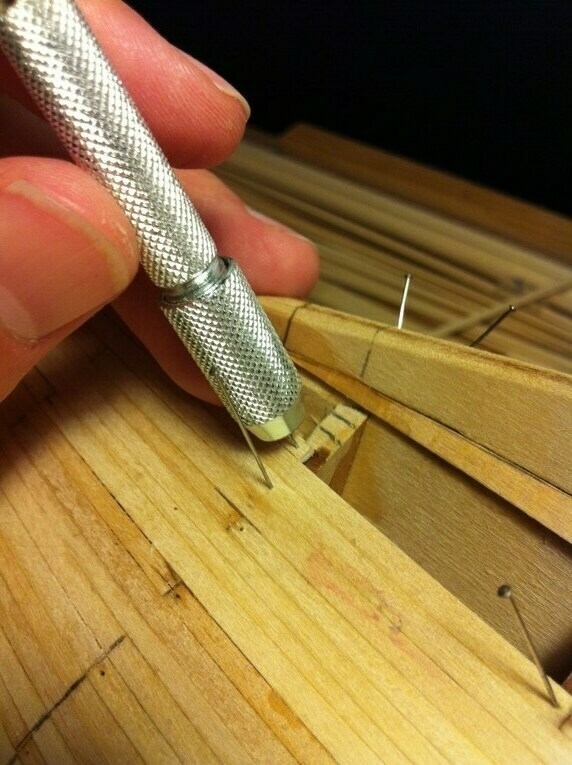
Part of me knew this was going to be difficult at best. Despite how I made it seem in the previous blog post, fitting in that piece of planking was not going to be easy. The big thing was that the rail, the deck planking and the existing hull planking were not all straight and level to each other. When I put the rail on I really wasn’t thinking about how straight and level it needed to be and how it would affect, and be affected by other parts of the boat. I simply followed the directions and put the rail on as I was told. Now that I was at the point where I had to fit in this tiny strip of wood, I realized it just wasn’t going to fit. I knew what I had to do, but didn’t want to do it.

In retrospect, I never should have installed the rail. Being my first boat project, I’ve been diligent about reading the instructions, making sure I understand them and following them to the best of my abilities. I’ve even found places where the actual order of the instructions didn’t make sense and when I was sure they were wrong, I would do something out of order. Well, the instructions called for the rail to be installed before the planking and I saw no reason not to do so. I was actually really happy with the way it turned out. At least until I had to put in the waist.

With the little bit of deck planking not really being level, the rail not really being straight and level and the hull planking being mostly straight and level I knew it was going to be nearly impossible to fit in that waist strip. I knew that I would have to remove the rail and take everything down to the bulkheads. So, I walked away from the project and took a break. I went back several times over the past few months and tried to fit in the waist, to no avail. Each time I did so I would say to myself, “You know what you need to do Jim” but I didn’t want to listen. I’d put a lot of work into this boat and the thought of tearing it apart to make it correct was not something I wanted to do.
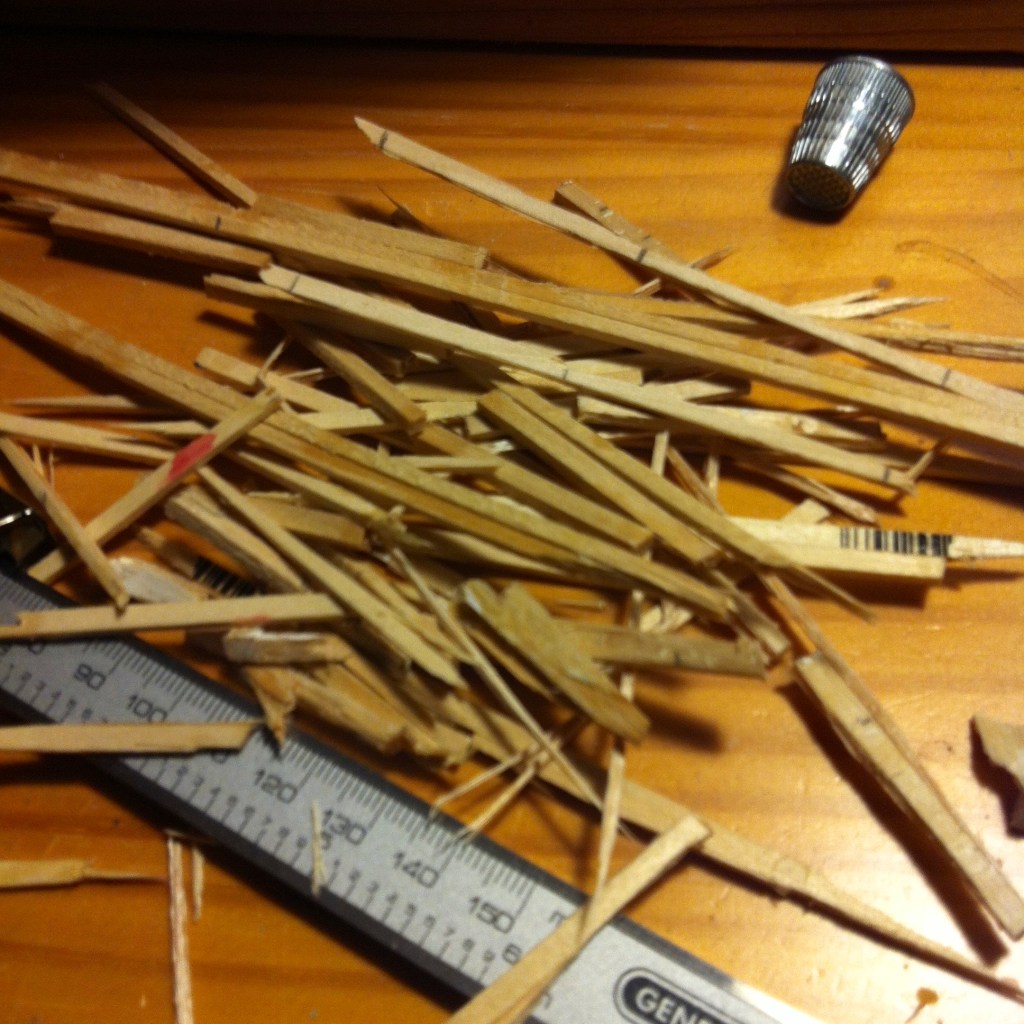
Well, I’m too much of a realist and in the end I faced up to it and started to tear it apart. First, I got off the rail and kept it mostly intact. I hope to re-use it later. I then ripped out all the waterway planking (a small bit of deck planking next to the bulkhead stanchions) and then cut off all the stanchions down to the deck level. Now the boat looks like the “after” picture above.

While difficult, I actually feel pretty good about this. I now know that I will eventually have a more solid foundation on which to finish the planking and then attach the rail and then finally plank the deck and build upward from there. I’ve learned in this project that the littlest error can compound itself over the long run and it is better to get it right from the start than to try to make up for it later. It only gets worse the longer you let it go.

Stay tuned. Now that I’ve faced reality and done what needed to be done, I hope to make more regular progress with the boat.

JIm
Planking Complete

Yay! I’ve finished planking the boat! I’m pretty excited that I’ve been able to complete what many consider to be the most difficult part of building a model ship (next to the rigging, I suppose).

I recently realized that I’ve just been posting pictures of the completed parts of my project and I thought I’d like to post more about the process. Below are some pictures of how I went about finishing the planking. Use your imagination, everything up to this point went pretty much the same way.


This is a close-up of the bow-end of the last belt. I need to fit six planks in that little space (it’s less than an inch wide).


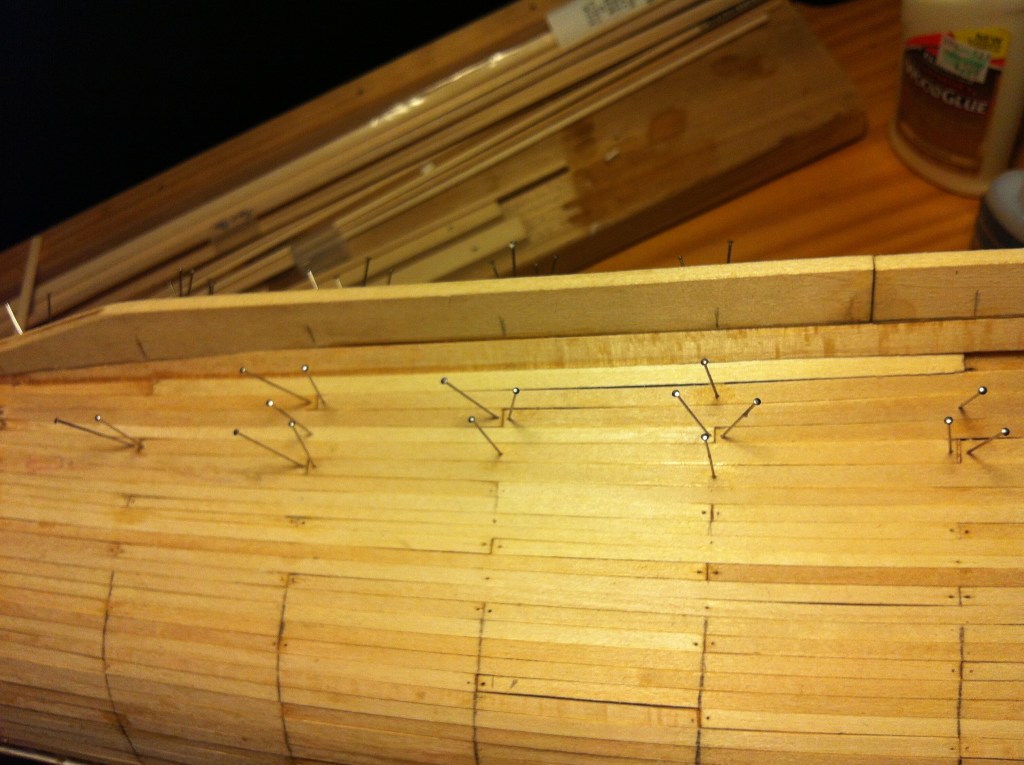
This is the middle section. Notice the pencil lines on each bulkhead. Prior to starting each belt, I measured the width of the belt at each bulkhead, divided that amount by the number of planks needed to fill that space and then marked out those widths on each bulkhead.


As I plank, I use those lines to make sure each plank is the proper width stem to stern. First, I measure the width needed at that particular point. Here the width is .09 inches (the calipers are upside-down).


After measuring and cutting the plank to length (I try to span three bulkheads with each plank), I then drill a small hole (.02 inches) at each end of the plank for the pins to hold it in place while the glue dries.


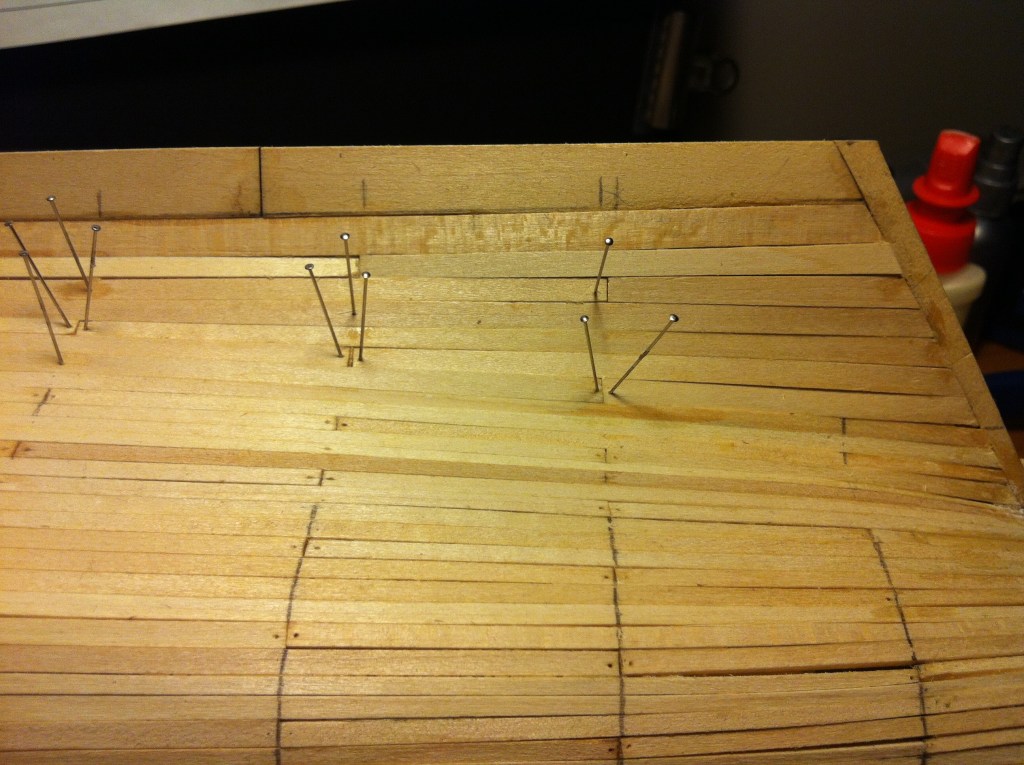
Here, the plank has been glued along the bottom edge with wood glue and then pinned in place. After pinning, I then use a few drops of cyanoacrylate glue (super-glue) to finish holding the plank in place. I sometimes used pins in the middle to hold the plank tight against the previous planks due to the natural curvature of the hull.


Repeat the process. Here I’m down to the last row of planks. Unlike previous belts, this belt ended in the “garboard strake” the final plank that runs up against the keel. I installed that strake first and now I need to fit in the final plank in the remaining space.


I read about this technique online. I took a piece of paper and lined it up with the previous strake and then used a pencil to trace along the garboard strake to measure exactly how wide the plank needed to be.


I then cut the paper along the line I drew and laid it out on the new plank. I then cut along that line to get a plank that would fit the spot exactly (supposedly!).


Ta da! Well, OK, I still had to sand, carve and fudge a bit to get it to fit. But it was pretty close.


Last piece!


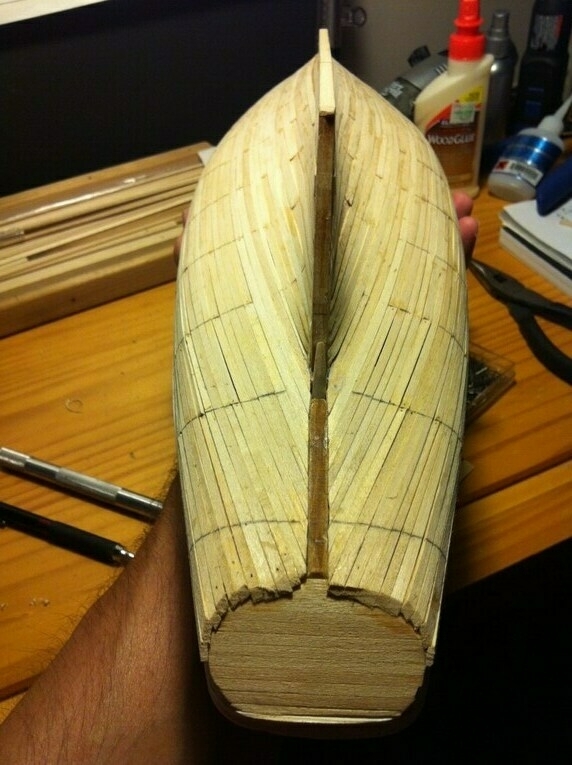
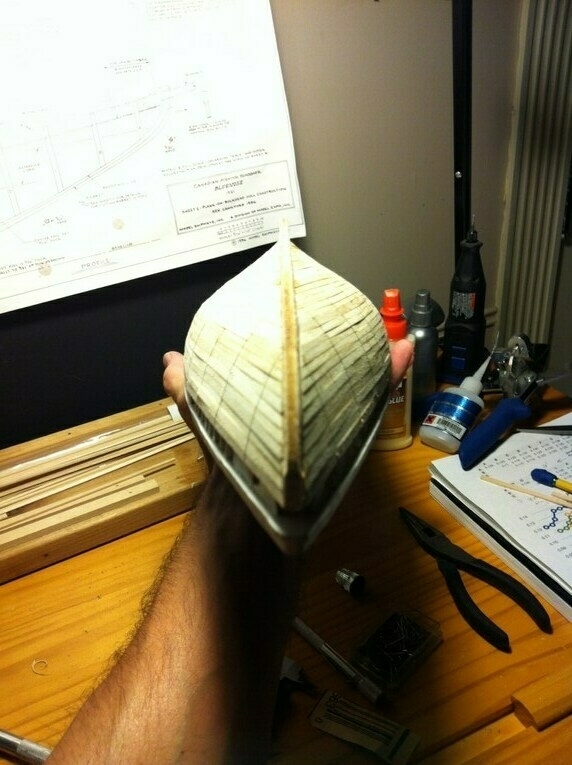
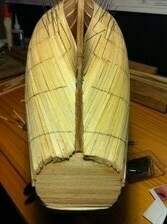
Stern view of finished hull. I like how the planks all sweep around and meet up along the center beam.


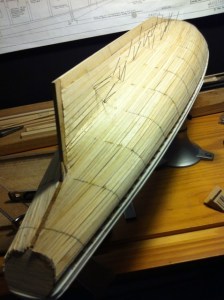
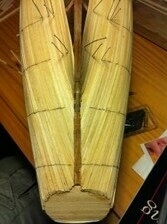
And a view from the bow.


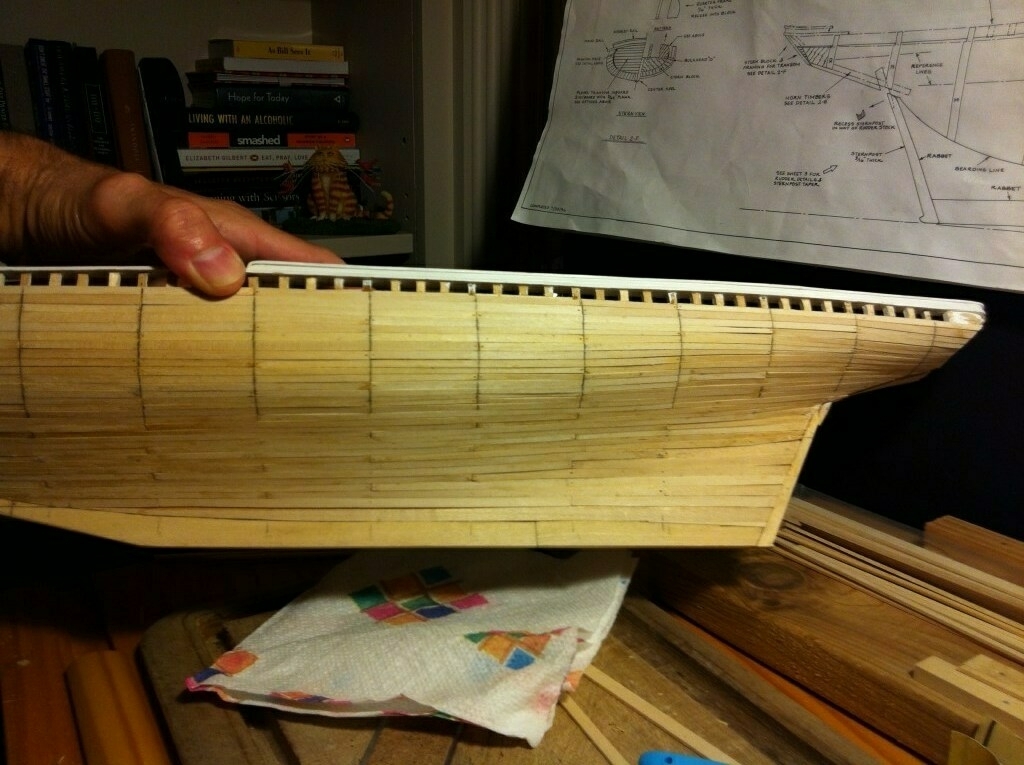
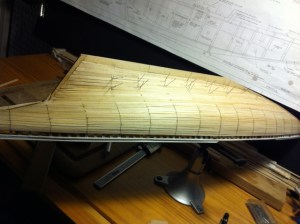
Finally, a view of the finished hull right side up!


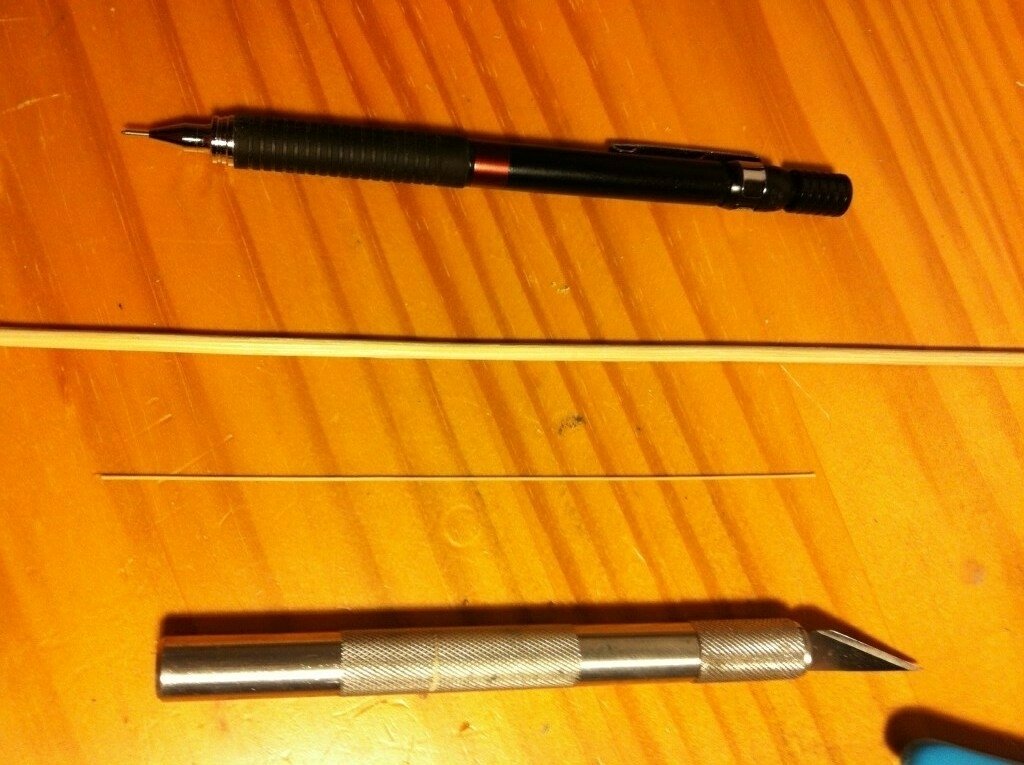
Next step, trenails! I need to drive wooden dowels into all the planks—one at each end of each plank and one at each bulkhead. To do this, I need to turn the bamboo skewers at the top of the picture into dowels the size of the one below (about .02 inches in diameter). I’ll show you how I’ll go about that in my next posting.

Stay tuned!

Seven-Eighths!

I’ve completed one entire side of planking! Pics below. This last belt is sort of weird in that I had to put the garboard plank (the plank closest to the keel) in first, and then fit in six other rows of planking in between. Furthermore, each of the rows of planks pretty much grew wider as they moved toward the stern. This last row is much wider than the previous rows. Things got a little messy at the end near the stern. I think that a lot of that will clean up with filler and sanding. Also, the boat is being painted in a dark red when done so that will help hide some of the imperfections. (That’s a terrible attitude to take, isn’t it?)


3/4 Done

I’m three-quarters of the way done with planking the boat!

It’s been a while since I’ve been able to work much on it. Lacrosse season started and I was working furiously to get the Lacrosse Scorebook app up and running that I just didn’t have any time to work on the boat. But now, Lacrosse season is over and the app is out being beta-tested for the summer and so now I have some time in the evenings to get back to planking. I’ve now finished the third belt on the starboard side. Next step is to finish up each side down to the keel. I’ll keep you posted as it goes. Hopefully sooner than the last update! In the meanwhile, enjoy the pics below.